
Department majors cultivate critical skills that prepare them for the present and the future. They learn how to seek out original information, craft arguments, and tell stories. With expertise in historical analysis and writing, our alumni have achieved careers in a wide variety of areas, from law and finance to teaching and international service, medicine, journalism, and the digital economy.
History
History is essential to all knowledge because everything has a past.
Deeply rooted in the human experience and humanistic study, our department teaches students to think big, delve deep, and make connections. The discipline of History has been a part of Middlebury since the college’s founding in 1800, and it remains a cornerstone of the liberal arts mission.
Majoring in History
Featured Course for Fall 2026
Each semester we’ll highlight a different course currently being taught in our department. Read more below about our Fall feature and some thoughts from the professor!
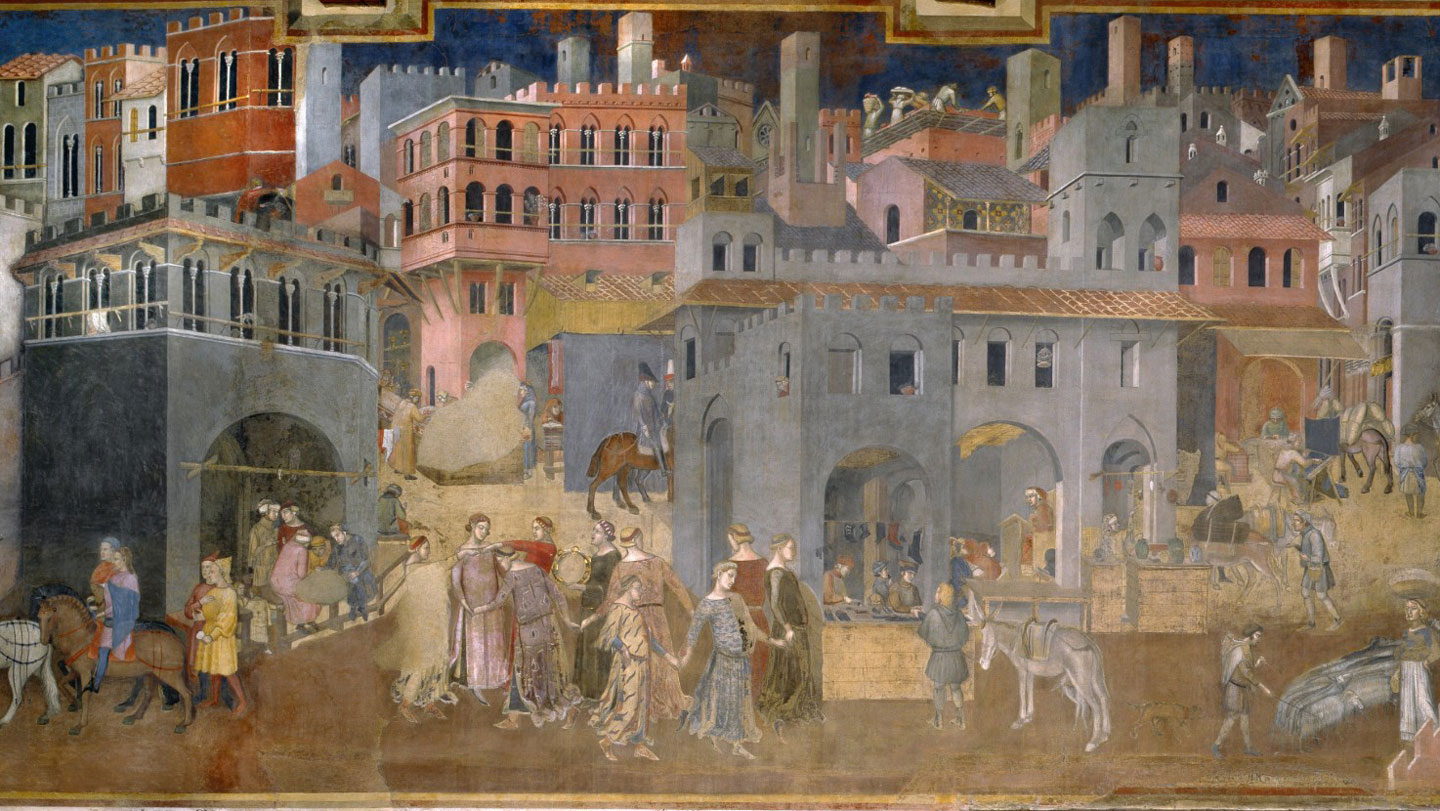
Medieval Cities with Professor Louisa Burnham (HIST 238)
This course examines the economic, social, topographical and cultural history of the medieval city. We study the transformation of urban life from the Roman period through the dark years of the early Middle Ages in the West into the flourishing of a new type of European city life in the High Middle Ages. The development of urban institutions, the building of cathedrals, universities and fortifications, and the growth of trade are all considered, as is the experience of groups such as Jews, women and intellectuals. Although the class focuses on the medieval European city, we also draw comparisons with cities of the Muslim East.
How did the course come about?
The idea came from a walk led by a professor in a history class at Middlebury’s School Abroad in Florence. He asked students to look at the “Via Torta” (Crooked Street) and imagine why it was shaped the way it was: the street marked the boundaries of the ancient Roman amphitheater. My class uses Google Earth and Street View to find the medieval cities hidden underneath modern ones, and students learn about how and why cities in medieval Europe were founded, laid out, and developed.
Why do you love teaching this class?
I love wandering around medieval cities, even virtually! I also love the class’s final project. Small groups create historically-grounded invented cities all over Europe, each with its own location, history, urban development, assets, challenges, and institutions. Students have now created 30 different cities over the years. Reiherswald on the Baltic, Checchino-sul-Brenta, Saint-Pierre-sur-Seine, Camporillas in Spain, and Boskovic on the Adriatic may never have existed, but their creators and I will always remember them and their imagined histories.