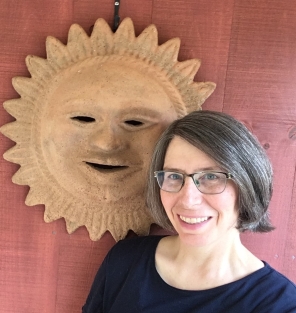
Anne Kelly Knowles
Associate Professor of Geography
Email: aknowles@middlebury.edu
Phone: work802.443.3434
Office Hours: Thursdays, 11:00-1:00; and by appointment.
Download Contact Information
Courses
Courses offered in the past four years.
▲ indicates offered in the current term
▹ indicates offered in the upcoming term[s]
AMST 0710 - Honors Thesis
Honors Thesis
For students who have completed AMST 0705, and qualify to write two-credit interdisciplinary honors thesis. on some aspect of American culture. The thesis may be completed on a fall/winter schedule or a fall/spring schedule. (Select a thesis advisor prior to registration)
Fall 2009, Winter 2010, Fall 2010, Winter 2011, Winter 2012, Winter 2013
FYSE 1260 - Holocaust Landscapes
Holocaust Landscapes
The Holocaust was a profoundly geographical event that caused mass displacement and migration, destroyed or fundamentally changed communities, and created new places to control, exploit, or kill millions of people. In this seminar we will focus on material and mental landscapes – the places and spaces – of the Holocaust, particularly as victims experienced these landscapes, and how such landscapes have been selectively re-imagined as sites of memory. History, geography, autobiography, and visual sources will provide material for class discussion, research, and writing. 3 hrs. sem.
Spring 2009, Fall 2010
GEOG 0100 - Place And Society
Place and Society: Local to Global
This course is an introduction to how geographers view the world and contribute to our understanding of it. Where do the phenomena of human experience occur? Why are they there? What is the significance? These questions are fundamental for explaining the world at different scales from the global to the local. Throughout, we will focus on the spatial basis of society, its continual reorganization through time, and how various human and environmental problems can be usefully analyzed from a geographic perspective. (Open only to first-year students and sophomores) 3 hrs. lect./3 hrs. lab
Spring 2010, Spring 2011, Spring 2013
GEOG 0218 / AMST 0218 - Cultural Geography
Cultural Geography
What do landscapes mean? How are places created and invested with significance? Why do people struggle to control public and private space? In this course we will examine these and similar questions. The main goals are to illuminate the wealth of meanings embodied in the built environment and our metaphorical understandings of landscape, place, space, and geographical identity, and to teach skills for interpreting and representing those meanings. Lectures, course readings, small-group projects, and papers will draw on social theory and empirical approaches, with a regional emphasis on North America. 3 hrs. lect.
Spring 2009, Spring 2010, Spring 2011
GEOG 0219 / AMST 0219 - Historical Geog of N. America ▲
Historical Geography of North America
North American society and landscape have been shaped by powerful forces over the last 500 years: conquest, disease, war, migration, the railroad and the farmer's plow, urban growth, and industrial transformation. In the process, new regional cultures formed while older societies were profoundly changed. In this course we will examine the geography of historical change in the United States and Canada, focusing on the themes of territorial control, human settlement, the inscribing of cultural and economic systems on the land, and North Americans' attitudes toward the places they inhabit. 3 hrs. lect.
Fall 2009, Fall 2010, Fall 2012, Fall 2013
GEOG 0239 - History of Cartography ▲
History of Cartography
This course introduces students to the history of maps as historical documents, records of social values and worldviews, instruments of power, and artistic productions of the cultures and historical periods in which they were created. Course topics will include indigenous mapping, the pegging out of empires, how cartography has served the interests of nation states, scientific revolutions in mapping technologies, maps in art, and mapping as a metaphor and expression of human experience. The overall goal is for students to learn to read maps deeply and understand how they have influenced, and how they reflect, major social trends and culture. (Not open to students who have taken GEOG 1004) 3 hrs. lect.
Fall 2012, Fall 2013
GEOG 0419 - Historical Geography Seminar
Seminar in Historical Geography: Visualizing the Past
Historical geography is the study of past places, landscape change over time, and the spatial patterns and processes embedded in historical conditions and events. This seminar explores key concepts, sources, and analytical methods in historical geography. Students' independent research projects will draw on maps and other primary documents as sources of historical evidence and geographic information. Project development will focus on learning how to frame spatial questions, gather geographic data, and apply geospatial methods to historical research. The main topic of the seminar in 2009-102012-13 will be the geographies of the Holocaust. (GEOG 0120 or GEOG 0219 or GEOG 0310 or GEOG 0320; open to seniors only, others by waiver) 3 hrs. sem.
Fall 2009, Spring 2013
GEOG 0500 - Independent Study ▲ ▹
Independent Study
A one-credit intensive research project developed under the direction of a faculty member. Junior majors only. (Approval Required)
Spring 2009, Fall 2009, Winter 2010, Spring 2010, Fall 2010, Winter 2011, Spring 2011, Winter 2012, Fall 2012, Winter 2013, Spring 2013, Fall 2013, Spring 2014
GEOG 0700 - Senior Research ▲ ▹
Senior Research
A one-credit intensive research project developed under the direction of a faculty member. Senior majors only. (Approval Required)
Spring 2009, Fall 2009, Winter 2010, Spring 2010, Fall 2010, Winter 2011, Spring 2011, Fall 2012, Winter 2013, Spring 2013, Fall 2013, Spring 2014
GEOG 0701 - Senior Thesis ▲ ▹
Senior Thesis
Students with a departmental GPA of 3.3 or higher are eligible to complete a two-credit senior thesis. In order to complete a senior thesis, students must have a proposal approved by a primary thesis advisor and a secondary departmental reader prior to registering for the first 0701 credit. Upon completion of the thesis, thesis students will present their work in a public seminar and defend the thesis in front of the departmental faculty. Thesis presentations and defenses will typically take place during the final week of classes or the examination period. Upon completion of the presentation and defense, the primary advisor and secondary departmental reader will be responsible for evaluating and grading the thesis. It is strongly encouraged that students considering a thesis discuss their ideas with an advisor during the semester prior to registering for formal thesis credits. (Approval only)
Fall 2012, Winter 2013, Spring 2013, Fall 2013, Spring 2014
GEOG 1004 - History of Cartography
History of Cartography
This course introduces students to the history of maps as historical documents, records of social values and worldviews, instruments of power, and expressions of human perception and experience. Course topics will include indigenous mapping, the pegging out of empires, the ways cartography has served the interests of nation states, scientific revolutions in mapping technologies, and maps in art. The overall goal is for students to learn to read maps deeply and understand how they have influenced and reflect major social trends.
Winter 2011
Research Areas
Historical Geography
Historical GIS
History of Cartography
The Holocaust
American industrialization and immigration
Cultural and economic landscapes
Degrees
B.A. in English, Duke University, 1979
M.Sc. and Ph.D. in Geography, University of Wisconsin-Madison, 1989 and 1993
Selected Publications
Books and Edited Volumes
| Knowles, Anne Kelly. 2013. Mastering Iron: The Struggle to Modernize an American Industry. University of Chicago Press. | |
| Knowles, Anne Kelly ed. 2008. Placing History: How Maps, Spatial Data, and GIS are Changing Historical Scholarship. Digital supplement edited by Amy Hillier. Redlands, CA: ESRI Press. | |
|
|
Knowles, Anne Kelly ed. 2005. Emerging Trends in Historical GIS. Thematic Issue of Historical Geography, vol 33. |
| Knowles, Anne Kelly ed. 2002. Past Time, Past Place: GIS for History.Redlands, CA: ESRI Press. | |
| Knowles, Anne Kelly ed. 2000. Historical GIS: The Spatial Turn in Social Science History. Thematic issue of Social Science History, vol. 24, no. 3. | |
| Knowles, Anne Kelly. 1997. Calvinists Incorporated: Welsh Immigrants on Ohio’s Industrial Frontier. Chicago: University of Chicago Press. |
Articles and Book Chapters
Knowles, Anne Kelly, with Waitman Beorn, Tim Cole, Simone Gigliotti, Alberto Giordano, Anna Holian, Paul B. Jaskot, Marc Masurovsky, and Erik B. Steiner. 2009. Geographies of the Holocaust.Geographical Review 99 (4): 563-74.
Knowles, Anne Kelly. 2008. What Could Lee See at Gettysburg? InPlacing History: How Maps, Spatial Data, and GIS Are Changing Historical Scholarship (ESRI Press): 235 – 265.
Knowles, Anne Kelly and Richard G. Healey. 2006. Geography, Timing, and Technology: A GIS-Based Analysis of Pennsylvania's Iron Industry, 1825-1875. Journal of Economic History 66 (3): 608-34.
Knowles, Anne Kelly. 2006. The white hands 'damn them...won't stick': Labor Scarcity and Spatial Discipline in the Antebellum Iron Industry. Journal of Historical Geography 32 (1): 57-73.
Knowles, Anne Kelly. 2002. Wheeling Iron and the Welsh: A Geographical Reading of ‘Life in the Iron Mills'. In Transnational West Virginia: Ethnic Work Communities during the Industrial Era, eds. Ronald Lewis and Kenneth Fones-Wolf. Morgantown: West Virginia University Press: 216-241.
Knowles, Anne Kelly. 2001. Afterword: Historical Geography since 1987. In North America: The Historical Geography of a Changing Continent, 2nd ed., eds. Thomas F. McIlwraith and Edward K. Muller. London: Rowman and Littlefield: 465-470.
Knowles, Anne Kelly. 2001. Labor, Race, and Technology in the Confederate Iron Industry. Technology and Culture 42 (1): 1-26.
Knowles, Anne Kelly. 2000. A Case for Teaching Geographic Visualization without GIS. Cartographic Perspectives36(spring): 24-37.
Knowles, Anne Kelly. 2000. Mapping Wisconsin. Geographical Review90 (2): 277-284.
Knowles, Anne Kelly. 2000. Alma Mater: Cartographic Portraits of Wellesley College. Mercator’s World5(November/December): 40-45.
Knowles, Anne Kelly. 1999. Migration, Nationalism, and the Construction of Welsh Identity. In Nested Identities, eds. Guntram Herb and David Kaplan, 289-315. Boulder, CO: Rowman & Littlefield.
Knowles, Anne Kelly. 1998. The Structure of Rural Society in Northern Cardiganshire, 1800-1850. In Cardiganshire County History, Vol. 3: Cardiganshire in Modern Times, eds. Ieuan Gwynedd Jones and Geraint H. Jenkins, 76-93. Cardiff: University of Wales Press.
Knowles, Anne Kelly. 1997. Religious Identity as Ethnic Identity: Welsh Settlement in Waukesha County, Wisconsin. In Wisconsin Land and Life, eds. Robert C. Ostergren and Thomas Vale, 282-299. Madison: University of Wisconsin Press.
Knowles, Anne Kelly. 1995. Immigrant Trajectories through the Rural-Industrial Transition in Wales and the United States, 1795-1850.Annals of the Association of American Geographers85: 246-266.
In Development
Knowles, Anne Kelly, Tim Cole, and Alberto Giordano, eds. Geographies of the Holocaust. In press, Indiana University Press. Publication expected in early 2014. This collection of seven essays represents the first fruits of an interdisciplinary collaboration among geographers and historians exploring how geographic methods, including GIS, spatial analysis, and geovisualization, can raise new questions and provide new insights into the Holocaust during WWII.
Major Post-Doctoral Fellowships, Grants, and Awards
American Ingenuity Award for Historical Scholarship, Smithsonian Magazine (2012). See the story in the Smithsonian Magazine online: "Looking at the Battle of Gettysburg Through Robert E. Lee's Eyes."
Newberry Library Short-Term Fellowship in the History of Cartography, for Mapping the American Century (2012).
National Endowment for the Humanities Summer Stipend, for editing Geographies of the Holocaust (2011).
National Science Foundation Collaborative Research Grant and Research at an Undergraduate Institution Grant, for Holocaust Historical GIS, Alberto Giordano (Texas State University) and Anne Kelly Knowles, PIs. Collaborators on the grant include Tim Cole (Bristol University), Marc Jean Masurovsky (U.S. Holocaust Memorial Museum), Paul B. Jaskot (DePaul University), Waitman Wade Beorn (University of North Carolina at Chapel Hill), Simone L. Gigliotti (Victoria University, Wellington, New Zealand), Anna Marta Holian (Arizona State University), and Erik B. Steiner (University of Oregon). 2008-2010.
Center for Advanced Holocaust Studies, funding for two-week interdisciplinary workshop, Geographies of the Holocaust, with Timothy J. Cole (Bristol University) and Alberto Giordano (Texas State University), U.S. Holocaust Memorial Museum, Washington, D.C. 2007.
National Endowment for the Humanities Research Fellowship for research on the American antebellum iron industry; designated a “We the People Project.” 2005-2006.
National Endowment for the Humanities Collaborative Research Grant to the Newberry Library (2003-2004) to fund specialist conference, “History and Geography: Assessing the Role of Geographical Information in Historical Scholarship,” at the Newberry Library in Chicago, March 25-27, 2004.
American Council of Learned Societies Research Fellowship. 1999-2000.
Mellon Postdoctoral Fellowship in Geography, Wellesley College. 1997-1999.