
J-Term 2026: Global Courses Across Three Continents
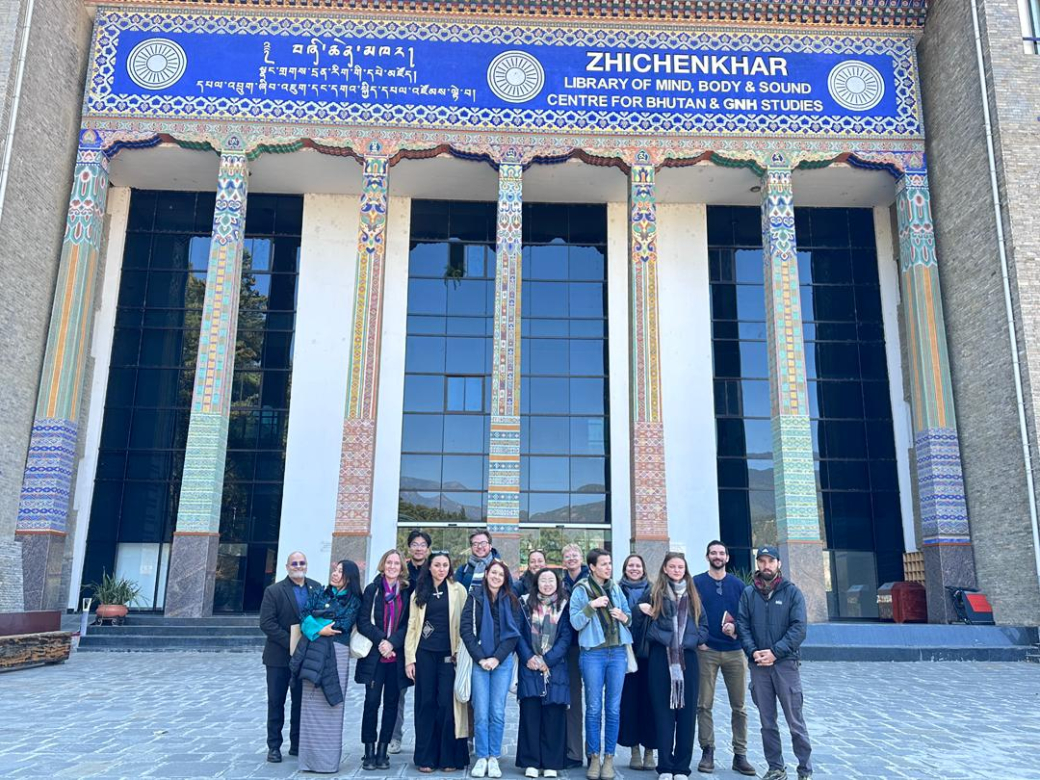
Every January and Spring Break, Middlebury Institute students step beyond Monterey’s classrooms into immersive global courses that translate theory into lived experience. Supported by the Davis Collaborative in Conflict Transformation and MIIS Experiential Learning Funds, the 2026 Winter Term brought nearly forty students to South Africa, Czechia/Austria, and Bhutan — three distinct contexts united by a shared pedagogical model: experiential learning grounded in local partnership, applied learning, and critical reflection.
These faculty-led global courses are part of MIIS’s broader experiential ecosystem, which includes the Professional Service Semester, Experiential Learning Funding, and practicum internships. January global courses provide on-the-ground training that cannot be replicated in the “traditional” classroom.
Our GNH course proved that in-person learning is essential. While students watched a documentary and completed readings beforehand, being there challenged those narratives and provided a more well-rounded understanding of complex issues.
Czech Republic & Vienna
From Research Reactor Operations to Global Safeguards
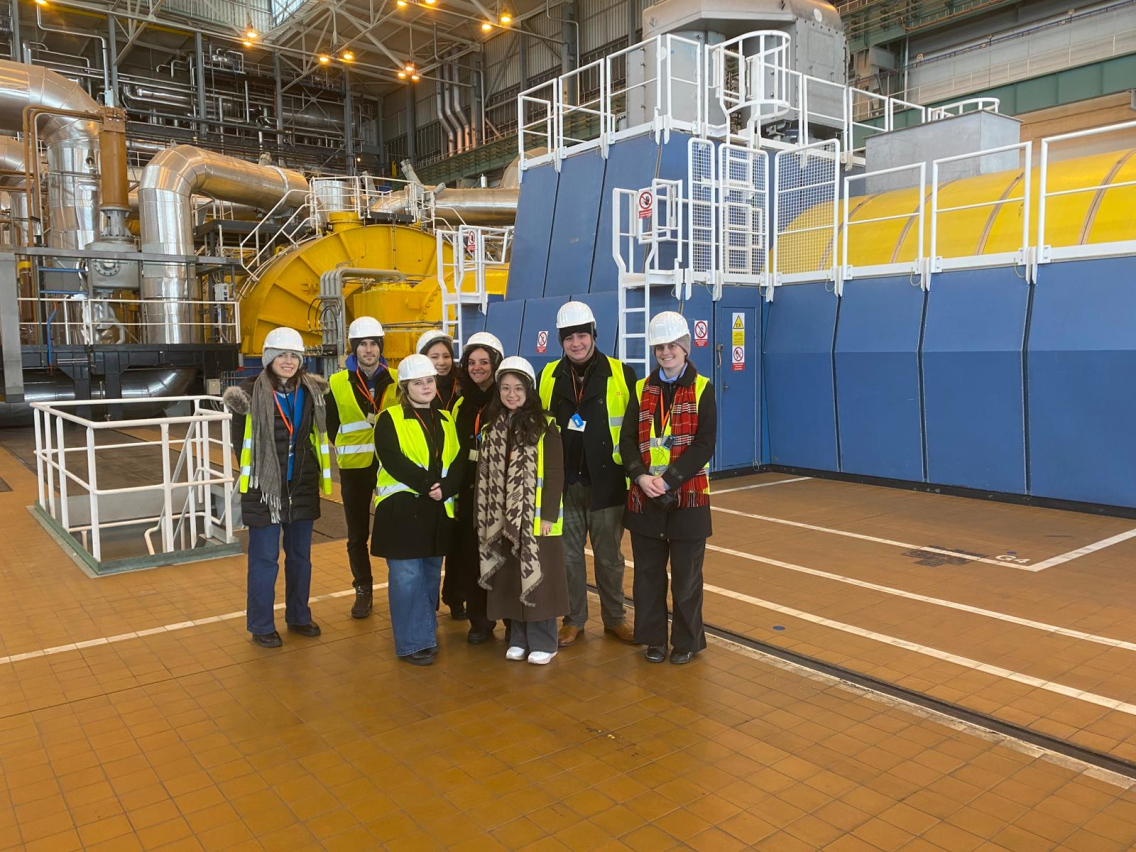


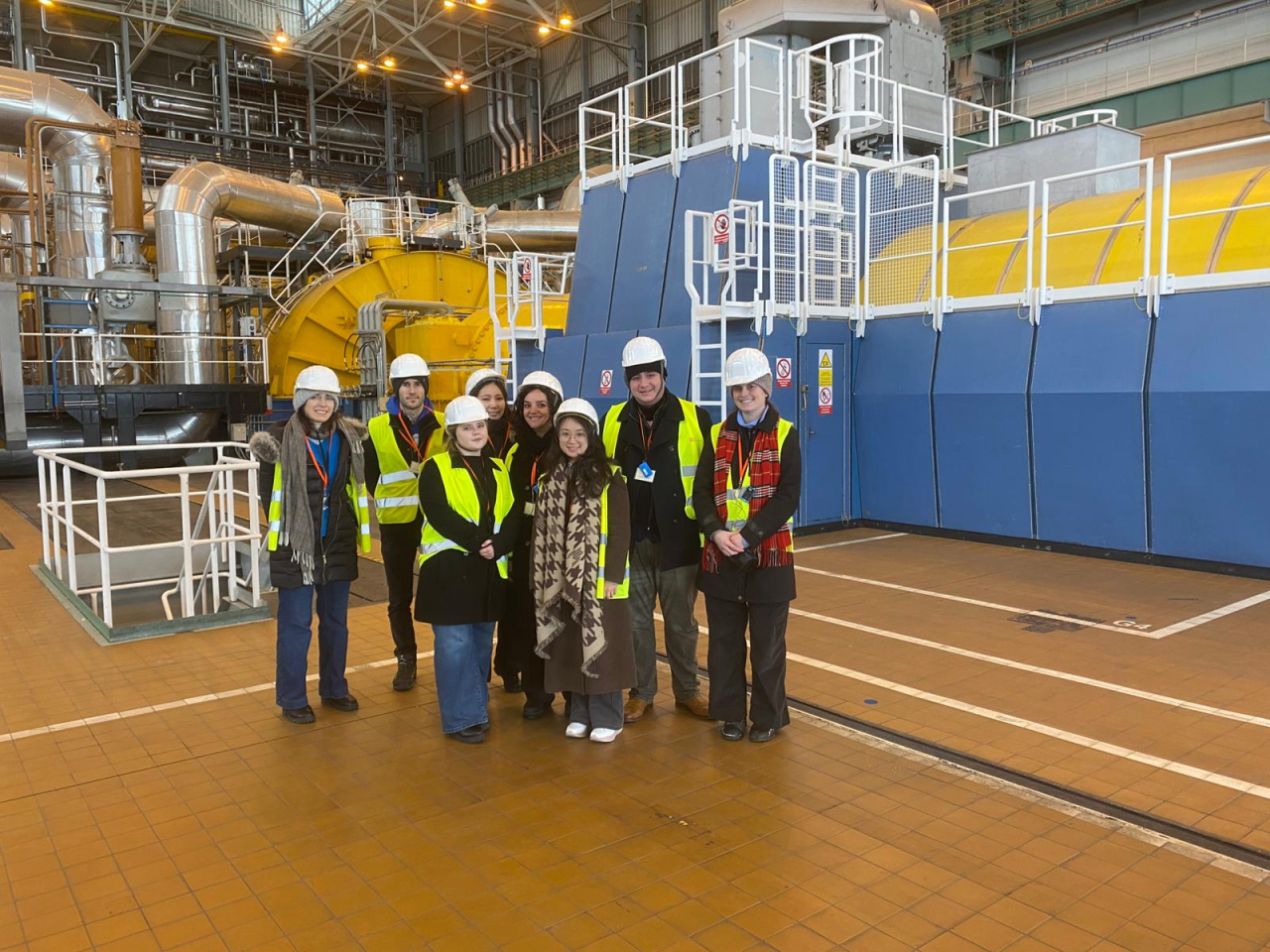
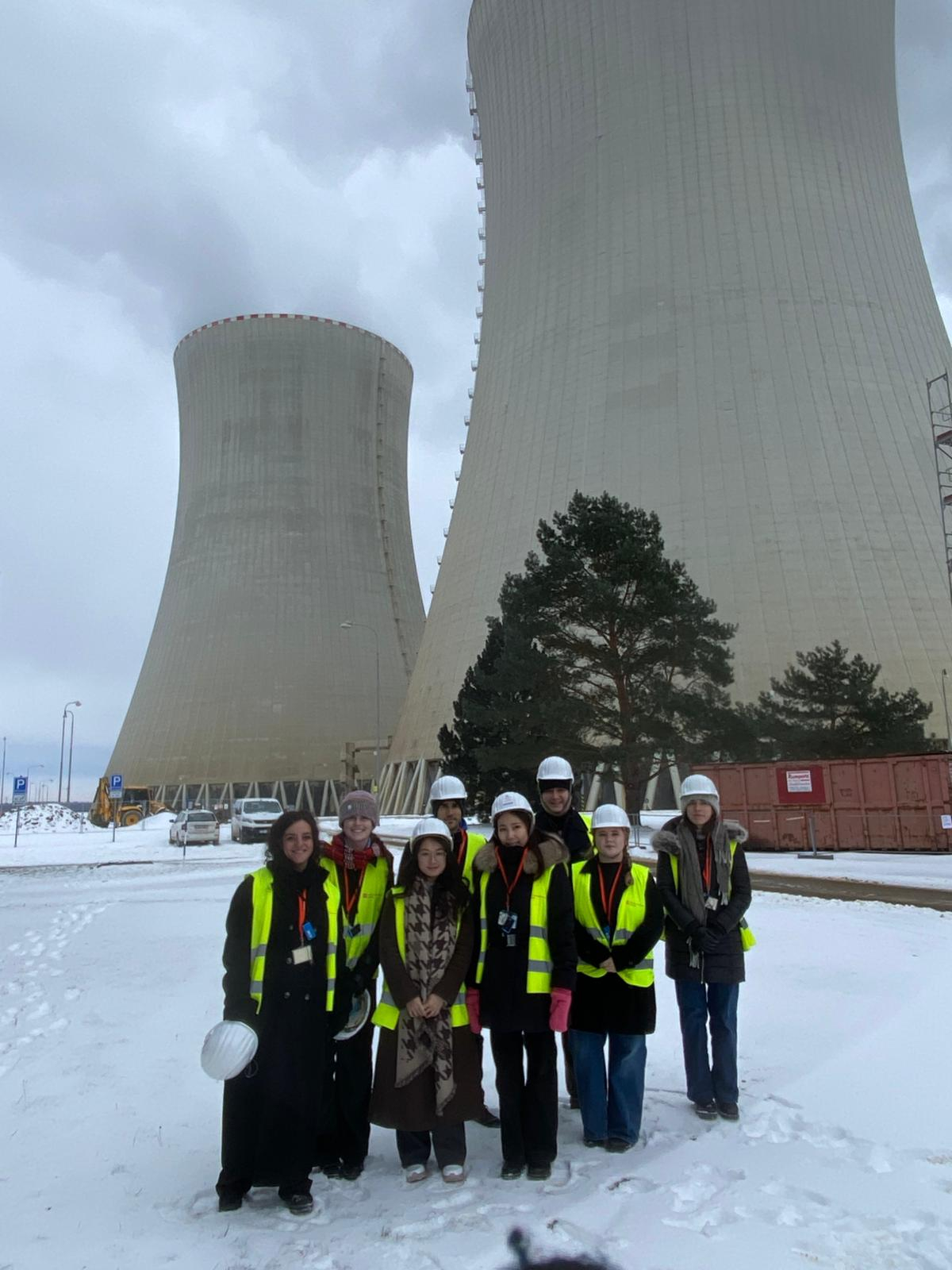
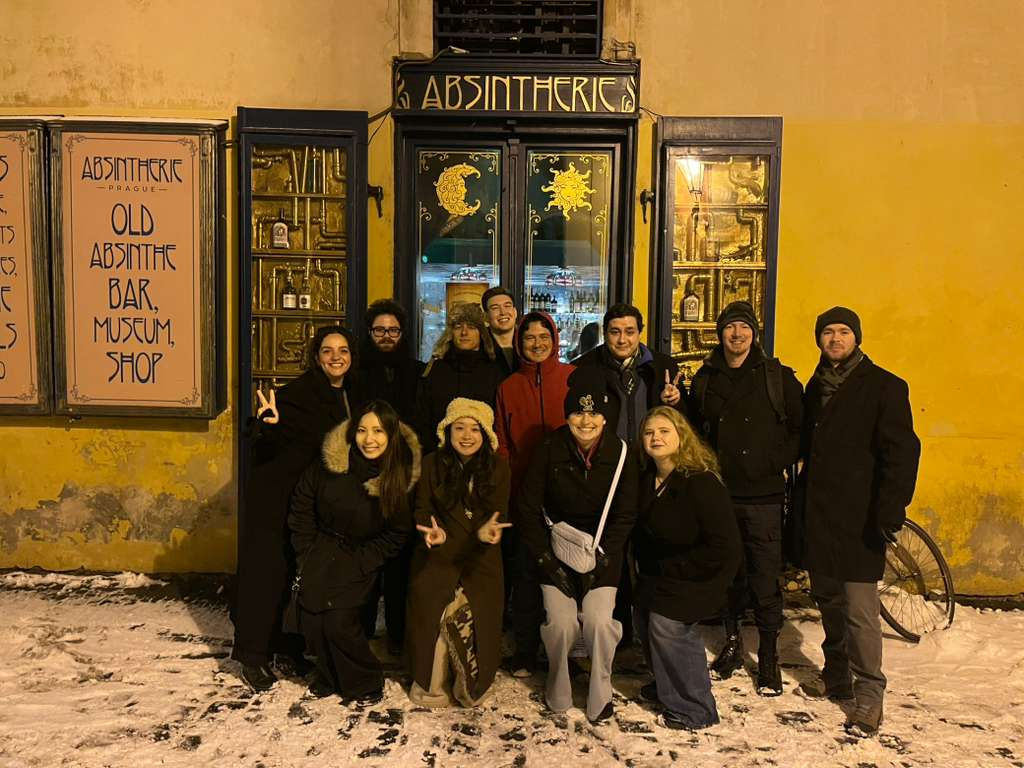
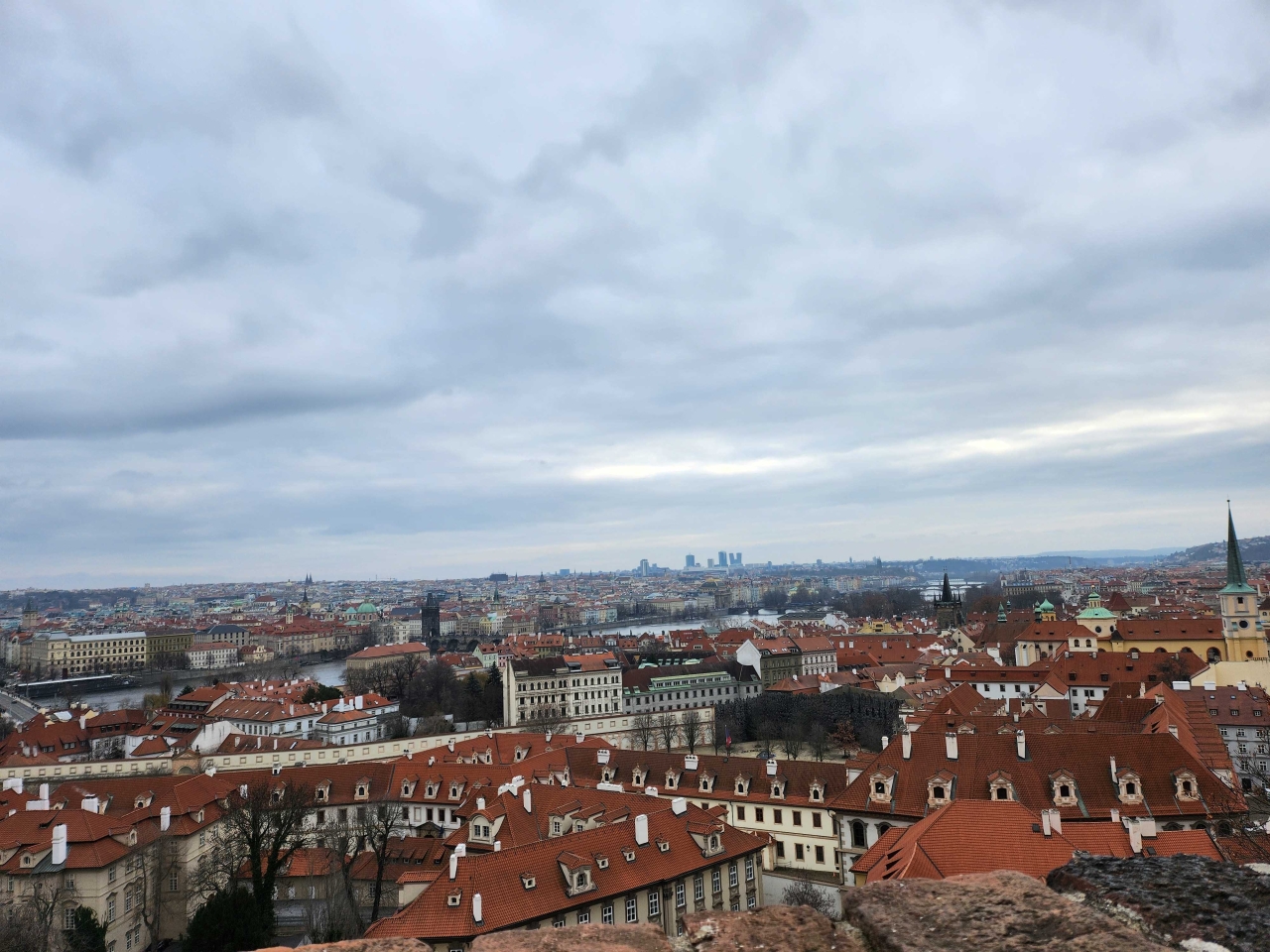
The Nuclear Research Reactor Practicum brought together 11 students for an intensive integration of nuclear physics fundamentals, nuclear security, nuclear safety, and nonproliferation policy.
Organized through a collaboration between the Middlebury Institute and the Faculty of Nuclear Sciences and Physical Engineering at Czech Technical University (CTU), the course included visits to a nuclear power plant, operation of a research reactor, and one-week meeting with international organizations working on nonproliferation at the Vienna International Centre.
The two-week practicum is designed to provide students the opportunity to learn about nuclear proliferation and nuclear terrorism and to observe how safeguards and nuclear security measures are implemented in practice.
Students acquired a basic understanding of reactor operation and control for research and power reactors, a basic understanding of the nuclear fuel cycle, and a basic understanding of radioactive decay, radiation detection, neutron activation analysis, and safe preparation of radionuclides in a research reactor.
This hands-on opportunity not only deepened my technical understanding of nuclear science, but also strengthened my commitment to global nuclear security and nonproliferation.
Visiting these two important organizations and seeing firsthand how nuclear reactors work are just some of the ways that this global course and the global courses at MIIS, in general, enable students to gain real-world, practical knowledge about the subjects that they are studying and the careers they seek.
After learning all about nuclear reactors in Prague, in the second week students travelled to Vienna. They engaged directly with practitioners at the International Atomic Energy Agency (IAEA), the Comprehensive Nuclear-Test-Ban Treaty Organization (CTBTO), the Vienna Center for Disarmament and Non-Proliferation (VCDNP), and the United Nations Office for Disarmament Affairs (UNODA) and learned more about the agency’s mission and main areas of work.
However, it wasn’t all about nuclear science on this trip to Prague. The participants were also able to explore the city and take in the many sights and sounds of this historic UNESCO World Heritage Site.
Meeting with practitioners working on safeguards, monitoring, and verification… reinforced how technical credibility supports effective nonproliferation and arms control work.
South Africa
Conflict Transformation Through Lived Realities
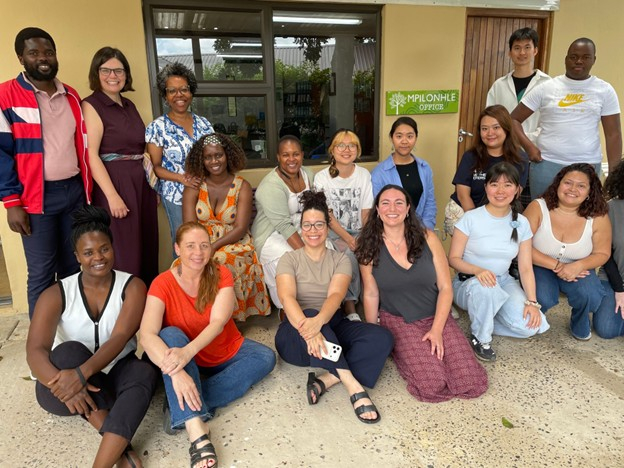


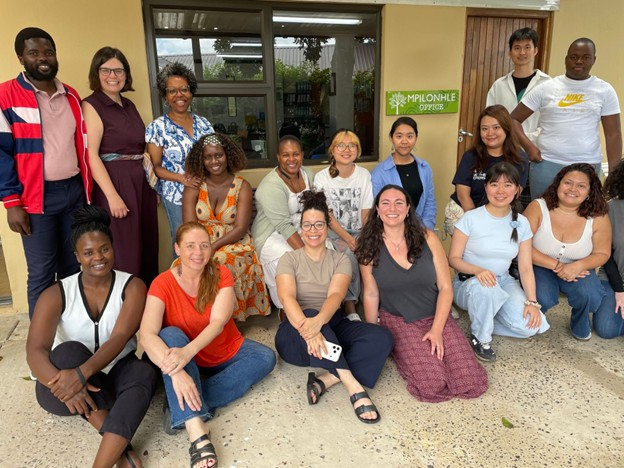
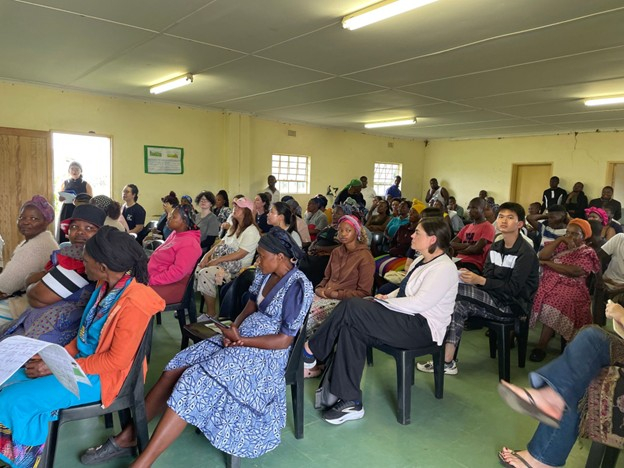
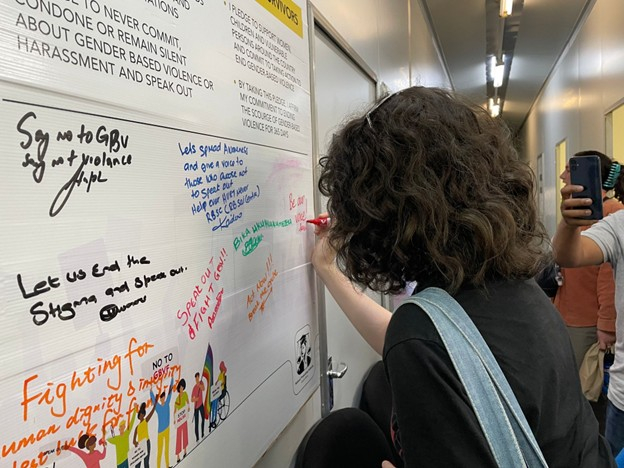
The Conflict Transformation in South Africa course was designed in collaboration with local nonprofit organizations, Mpilonhle and Rivonia Circle. Led by Anne Campbell and Middlebury Institute alumna Yuniya Khan, twelve students from MIIS along with two South African students explored South Africa’s post-apartheid journey through structural and interpersonal violence challenges. Students connected history, governance, and political economy to the patterns of exclusion that persist today.
Students spent their first week immersing themselves in South African culture, followed by a week of hands-on project management and design training alongside professionals at Mpilonhle. These two weeks challenged students to look beyond the headlines and engage with the lived realities of inequality, resilience, and transformation while working on a specific challenge: domestic violence in the region.
Supported by the Katherine Wasserman Davis Conflict Transformation Collaborative, the South Africa Global Course offered a deeply immersive experience grounded in the principles of conflict transformation. Central to the course was understanding spatial apartheid, economic inequality, and the policy efforts designed to address them.
International Policy and Management degree candidate, Ellie Crist shared her experience:
“One of the things that stood out to me most during my time in South Africa was witnessing the enduring legacy of spatial apartheid. Early in the trip, we spent a day working with Rivonia Circle in Alexandra, one of the country’s poorest townships. The streets were overcrowded, makeshift homes were wedged between already dense housing, and poverty and hunger were visibly pervasive. Yet just minutes away, as we drove out of Alex, we entered Sandton, the wealthiest square mile on the African continent. The contrast was striking. Sandton’s modern architecture, high fences, visible security presence, and leisurely pace of life stood in sharp opposition to the conditions we had just encountered. The proximity of such extreme inequality made the structural divisions of apartheid feel not like history, but like a living reality.”
The course did not frame conflict as static; it examined transformation as ongoing, contested, and locally led. Students left with sharpened analytical tools and a deeper understanding of how inequality persists — and how institutions and communities work to address it.
Bhutan
MIIS Students Explore the Convergence of Gross National Happiness and the United Nations Sustainable Development Goals
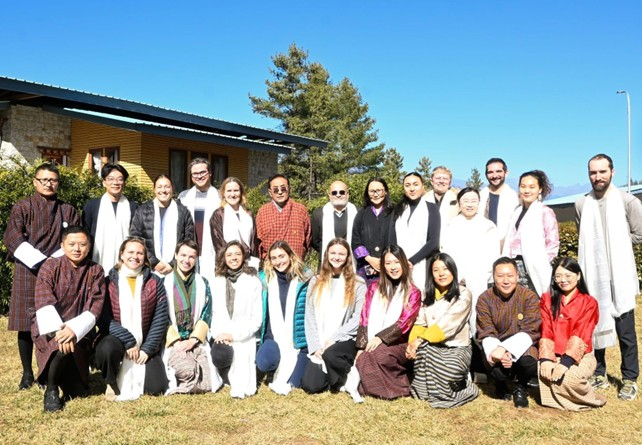


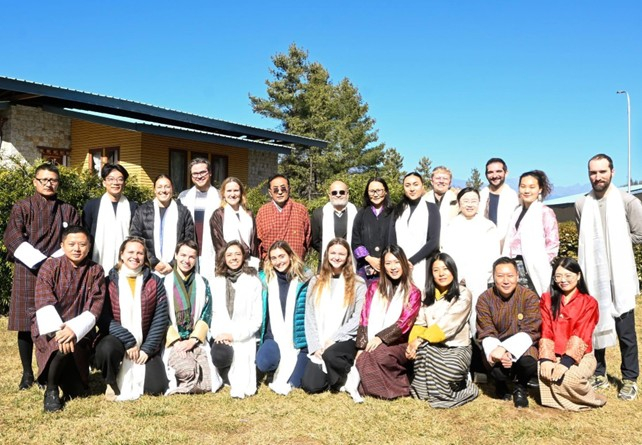
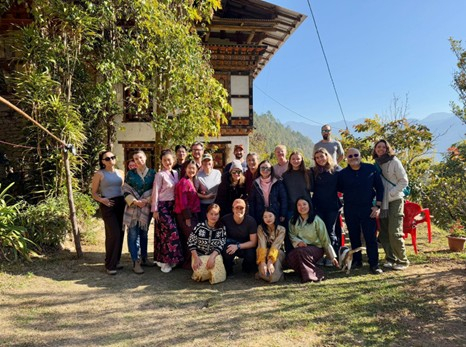
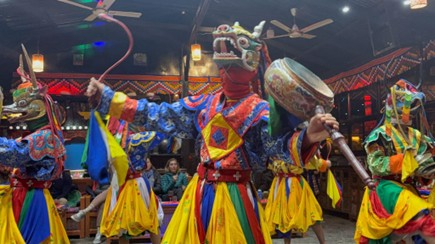
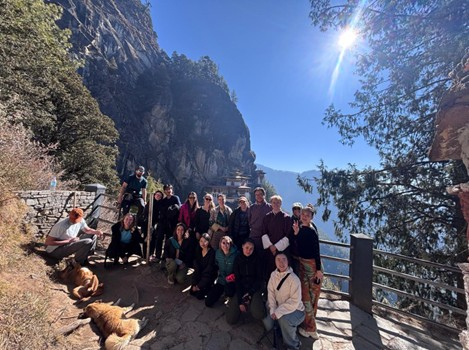

Led by MIIS faculty Sharad Joshi and Carolyn Meyer, in partnership with staff from Royal Thimphu College (RTC), the course—‘Bhutan’s Development Journey: Exploring Gross National Happiness (GNH) and the UN Sustainable Development Goals (SDGs)’—challenged students to explore the nation’s unique approach to progress.
For eleven days this January, sixteen MIIS students traded Monterey’s coastline for the Himalayan mountains, traveling to Bhutan for an immersive global course built around a deceptively simple question:
What if a country measured progress by ”happiness” instead of Gross Domestic Product (GDP)?
Students engaged faculty and Bhutanese experts in discussions about how GNH is translated from philosophy to policy. They analyzed environmental conservation mandates, sustainable economic planning, and social development strategies aligned with the SDGs.
Known worldwide as the ‘happy country’, Bhutan’s commitment to Gross National Happiness embraces the idea that government should be more concerned with the wellbeing of its citizens more so than the economy.
Students confronted pressing dilemmas: the country’s economic reliance on hydropower exports, rising youth migration and “brain drain,” and the tension between infrastructure development and cultural preservation.
In conflict transformation workshops, they examined how Bhutan’s state institutions and civil society collaborate to manage these pressures through culturally informed diplomacy and consensus-building. Field visits took students into valleys and villages where policy became tangible. They observed conservation initiatives protecting forests that make Bhutan carbon-negative.
Those exchanges — over milk tea and cheese momos, during homestays with local families, or while walking beneath centuries-old dzongs — revealed the lived dimension of GNH. The program arc stretches beyond the eleven days abroad.
The next global course will focus on Conflict Transformation in East Asia March 14-23, 2026. Students will travel with Profs. Wei Liang and Junko Matsuda to China and Japan to explore economic security and development challenges in the region.
For More Information
The Experiential Learning Team at MIIS
ExperientialLearning@middlebury.edu
831-647-6417