
Resource Scholars and Experts
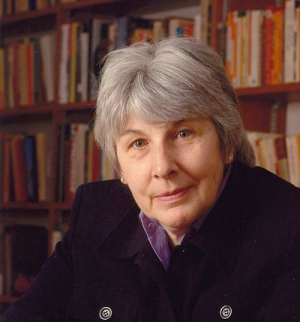
Sheila Fitzpatrick
Sheila Fitzpatrick is Distinguished Service Professor Emerita of the University of Chicago and Honorary Professor at Australian Catholic University and the University of Sydney. Her most recent books are The Death of Stalin (2025), Lost Souls: Soviet Displaced Persons and the Birth of the Cold War (2024), The Shortest History of the Soviet Union (2022), and White Russians, Red Peril: A Cold War History of Migration to Australia (2021).
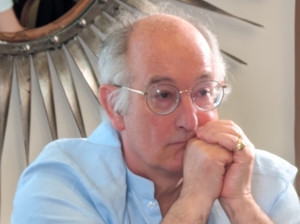
Dominic Lieven
Dominic Lieven is an English research professor at Cambridge University (Senior Research Fellow, Trinity College) and a Fellow of the British Academy and of Trinity College, Cambridge. Professor Lieven has authored numerous books and scholarly articles over a career spanning more than four decades. His books include, most recently, In the Shadow of the Gods: The Emperor in World History (2022); Towards the Flame: Empire, War and the End of Tsarist Russia (2015), published in the U.S. as The End of Tsarist Russia: The March to World War I and Revolution; Russia Against Napoleon: The Battle for Europe, 1807 to 1814 (2009); Empire: The Russian Empire and Its Rivals (2001); Nicholas II: Emperor of All the Russias (1993); The Aristocracy in Europe, 1815–1914 (1992); Russia’s Rulers Under the Old Regime (1989); and Russia and the Origins of the First World War (1983). He also served as editor of The Cambridge History of Russia, Volume II: Imperial Russia, 1689–1917 (2006), and has published many scholarly articles on Russian imperial history, geopolitics, and comparative empire studies.
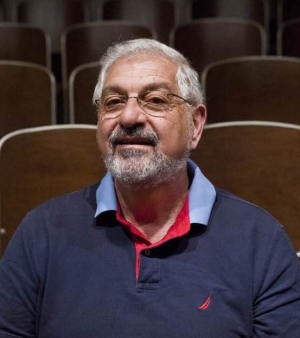
Ronald Suny
Ronald Grigor Suny is William H. Sewell, Jr. Distinguished University Professor of History and Professor of Political Science Emeritus at the University of Michigan and Emeritus Professor of Political Science and History at the University of Chicago. He was the first holder of the Alex Manoogian Chair in Modern Armenian History at the University of Michigan, where he founded and directed the Armenian Studies Program. He is author of The Baku Commune: Class and Nationality in the Russian Revolution; The Making of the Georgian Nation; Looking Toward Ararat: Armenia in Modern History; The Revenge of the Past: Nationalism, Revolution, and the Collapse of the Soviet Union; The Soviet Experiment: Russia, the Soviet Union and the Successor States; “They Can Live in the Desert But Nowhere Else”: A History of the Armenian Genocide; Red Flag Unfurled: History, Historians, and the Russian Revolution; Red Flag Wounded: Stalinism and the Fate of the Soviet Experiment; Stalin: Passage to Revolution:and co-author with Valerie Kivelson of Russia’s Empires. He is currently working on a book on the history of the nation-form and the recent upsurge of exclusivist nationalisms and authoritarian populisms: Forging the Nation: The Making and Faking of Nationalisms.

Hanna Notte
Dr. Hanna Notte is the director of the Eurasia Nonproliferation Program at the James Martin Center for Nonproliferation Studies in Monterey, California. She is also a senior associate (non-resident) with the Europe, Russia, and Eurasia Program at the Center for Strategic and International Studies and an associate fellow with the Kennan Institute in Washington, DC. Her expertise is in Russian foreign policy, the Middle East, and arms control and nonproliferation. Notte holds a doctorate and an MPhil in international relations from Oxford University and a BA in social and political sciences from Cambridge University. Based in Berlin, her writing regularly appears in outlets such as The Atlantic, the Financial Times, Foreign Affairs, the New York Times, and War on the Rocks, among others. Notte previously worked with the Shaikh Group, a nongovernmental organization focused on informal diplomacy in Middle East conflicts, supporting its engagement with Russia. During her doctoral studies, she was a visiting researcher with the Institute of Oriental Studies of the Russian Academy of Sciences and the Carnegie Moscow Center. Her forthcoming book We Shall Outlast Them: Putin’s Global Campaign to Defeat the West will be published with W. W. Norton & Company in August 2026.
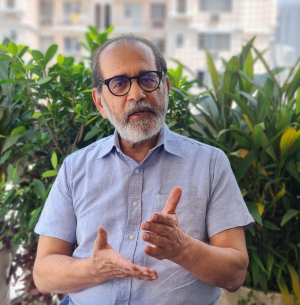
Rakesh Sood
Ambassador Rakesh Sood is a senior Indian diplomat who spent 38 years serving successive governments. Having joined the Indian Foreign Service in 1976, he served initially in Brussels, Dakar, Geneva, and Islamabad in different capacities, and as Deputy Chief of Mission in Washington, D.C. At the Ministry, he set up the Disarmament and International Security Affairs Division in the Foreign Ministry and led it for nine years. During this period, Ambassador Sood was in charge for multilateral disarmament negotiations (CWC, CTBT, BWC Verification Protocol, CCW, etc.), bilateral dialogues with Pakistan, strategic dialogues with other countries including US, UK, France and Israel (especially after the nuclear tests in 1998), non-proliferation related export controls and dealt with India’s role in the ASEAN Regional Forum, as part of the ‘look East’ policy.
He has served as India’s first Ambassador and Permanent Representative to the Conference on Disarmament in Geneva and during this period, he handled negotiations relating to landmines, and review conferences of the Biological Weapons Convention. He also served on the UN Secretary General’s Disarmament Advisory Board. Subsequently, Amb Sood served as Ambassador to Afghanistan and oversaw a significant economic assistance programme that India undertook to rebuild ties. He served as Ambassador to Nepal during a crucial period as it emerged from a decade long Maoist insurgency to establish a federal, multi-party democracy. Following his tenure as Ambassador to France, Ambassador Sood was appointed Special Envoy of the Prime Minister for Disarmament and Non-proliferation, a position he held until May 2014.
Since leaving government, Ambassador Sood has been writing and speaking on foreign policy, regional and global security related issues at home and abroad. He is currently Distinguished Fellow at the Council for Strategic and Defence Research, a Delhi based think-tank. A selection of his writings and interviews may be seen at https://rakeshsood.in/

Michael Reynolds
Michael A. Reynolds is Associate Professor of Near Eastern Studies and Co-Director of the Program in History and the Practice of Diplomacy at Princeton University, where he teaches courses on Ottoman, Middle Eastern and Eurasian history, the Caucasus, nationalism, empire, and U.S. foreign policy. He has held fellowships from the New York Public Library’s Cullman Center for Scholars and Writers, the Weatherhead Center at Harvard University, and the Smith-Richardson Foundation among others. He is a two-time Fulbright Scholar, most recently at Moscow State Institute of International Relations (MGIMO), where taught in 2021-2022.
He is the author of Shattering Empires: The Clash and Collapse of the Ottoman and Russian Empires (2011), a winner of the American Historical Association’s George Louis Beer Prize and a Financial Times summer book list selection. His biography of the Young Turk and Ottoman Minister of War Enver Pasha, A Life Lived Like a Storm: Enver Pasha and the Birth of a New World Order, is forthcoming in 2026 with Princeton University Press. He is the editor of Constellations of the Caucasus: Empires, Peoples, and Faiths (2016) and co-editor of Christians in Middle Eastern History: Strangers No More, forthcoming in 2026 with Edinburgh University Press. He is a senior fellow of the Foreign Policy Research Institute and has written on foreign policy and international affairs for non-academic audiences in The Wall Street Journal, Los Angeles Times, Newsweek, The National Interest, and Compact. He holds a BA in Government and Slavic Languages and Literature from Harvard, an MA in Political Science from Columbia, and a PhD in Near Eastern Studies from Princeton.
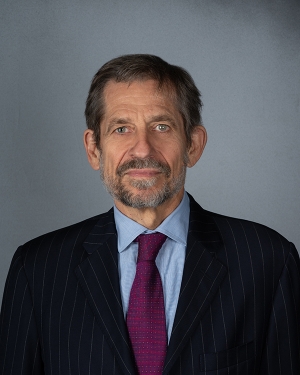
Thomas Graham
Thomas E. Graham is a distinguished fellow at the Council on Foreign Relations. He is a cofounder of the Russian, East European, and Eurasian studies program at Yale University and sits on its faculty steering committee. He is also a research fellow at the MacMillan Center at Yale, where he teaches a course on U.S.-Russian relations. Graham was special assistant to the president and senior director for Russia on the National Security Council staff from 2004 to 2007, during which he managed a White House-Kremlin strategic dialogue. He was director for Russian affairs on the staff from 2002 to 2004.
Graham was a Foreign Service officer for fourteen years. His assignments included two tours of duty at the U.S. Embassy in Moscow in the late Soviet period and in the middle of the 1990s during which he served as head of the political internal unit and acting political counselor. Between tours in Moscow, he worked on Russian and Soviet affairs on the policy planning staff at the U.S. Department of State and as a policy assistant in the office of the under secretary of defense for policy.
Graham serves on the Kennan council of the Kennan Institute of the Wilson Center and on the advisory board of Russia Matters, a project of the Harvard Kennedy School’s Belfer Center for Science and International Affairs with the goal of enhancing the understanding of Russia among policymakers and the interested public. He also serves on the editorial board of the US-Canada Journal of the USA-Canada Institute of the Russian Academy of Sciences.
Graham holds a BA in Russian Studies from Yale University, an MA in History, and a PhD in Political Science from Harvard University.
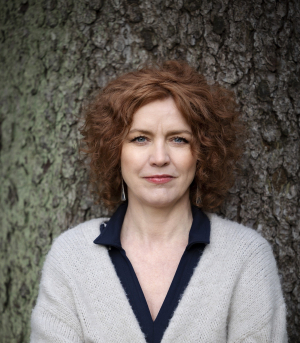
Dace Dzenovska
Dace Dzenovska is Associate Professor in the Anthropology of Migration at Oxford University. She is the author of School of Europeanness: Tolerance and Other Lessons in Political Liberalism (Cornell, 2018). She runs a European Research Council grant on the politics of emptiness and is completing a book entitled Empires We Choose: Sovereignty and Migration in a Double-Periphery.
Yuri Slezkine
Yuri Slezkine is a professor of the Graduate School at the University of California, Berkeley and a member of the American Academy of Arts and Sciences. He has been a fellow at the Hoover Institution, the International Institute at the University of Michigan, the Center for Advanced Study in the Behavioral Sciences, the John Simon Guggenheim Memorial Foundation, and Wissenschaftskolleg zu Berlin. He served as a distinguished visiting professor at Vassar College, an honorary professor at the University of Nottingham, and a visiting professor at the Ludwig-Maximilians University in Munich and Sciences Po in Paris. His book, The Jewish Century (Princeton UP, 2004), has received several awards and has been translated into ten languages. His next book, The House of Government: A Saga of the Russian Revolution (Princeton University Press, 2017), was named among the best books of 2017 by the New York Times, Spectator, the Guardian, the Economist, the London Review of Books, and Le Monde, among others, and has been translated into nine languages. His most recent book is a Latvian-language essay entitled Ivar Smilga and the Russian Epilogue of the Latvian Revolution (Rigas Laiks, 2022, also available in Russian).

Anatol Lieven
Anatol Lieven is Director of the Eurasia Program and Andrew Bacevich Chair of American Diplomatic History at the Quincy Institute for Responsible Statecraft in Washington DC. He was a professor at Georgetown University in Qatar from 2014 to 2021. He holds a BA and PhD from Cambridge University in England.
His latest book, Climate Change and the Nation State, was published in 2021.
From 1986 to 1998, he worked as a British journalist in South Asia, Afghanistan, the former Soviet Union and Eastern Europe, and is author of several books on these regions including Pakistan: A Hard Country (2011) and Ukraine and Russia: A Fraternal Rivalry (1999).
America Right or Wrong: An Anatomy of American Nationalism (updated second edition 2012) delineated the main dividing lines in US politics and political culture concerning national identity and foreign policy.
He writes frequently for the media, and his articles have appeared in The Financial Times, The Guardian, The New York Times, Foreign Affairs, Foreign Policy, Time and Newsweek.
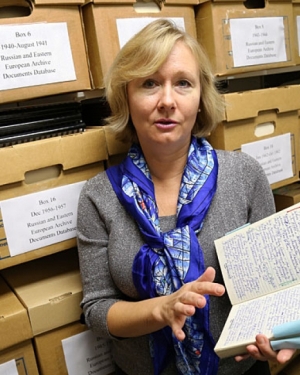
Svetlana Savranskaya
Svetlana Savranskaya is director of Russia programs at the National Security Archive at George Washington University and adjunct professor at American University’s School of International Service. She leads the Cooperative Threat Reduction Program of the Archive, focusing on the Nunn-Lugar initiative and the ongoing challenges of U.S.-Russia relations, and manages the Archive’s work with academics and organizations still inside Russia and those now in exile, including long-standing partnerships with the Memorial Society and the Moscow Helsinki Group. Her books include The Soviet Cuban Missile Crisis: Castro, Mikoyan, Kennedy, Khrushchev, and the Missiles of November (Woodrow Wilson Center Press/Stanford University Press, 2012, with Sergo Mikoyan); “Masterpieces of History”: The Peaceful End of the Cold War in Europe 1989 (Central European University Press, 2010, with Thomas Blanton and Vladislav Zubok); and The Last Superpower Summits: Gorbachev, Reagan and Bush: Conversations that Ended the Cold War (Central European University Press, 2016, with Thomas Blanton). A graduate of Moscow State University, she earned her Ph.D. at Emory University. Her articles have appeared in the Journal of Strategic Studies and the Cold War International History Project Bulletin, and she has authored book chapters for the World Political Forum, the Cambridge History of the Cold War, and many other volumes.
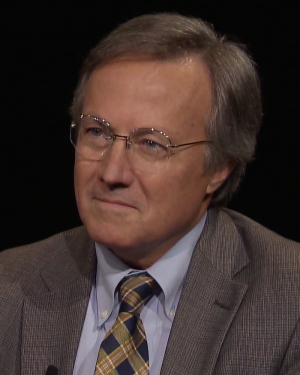
Thomas Blanton
Thomas Blanton is director (since 1992) of the independent non-governmental National Security Archive at George Washington University (https://nsarchive.gwu.edu). He won the 2004 Emmy Award for individual achievement in news and documentary research, and on behalf of the Archive received the George Polk Award in 2000 for “piercing self-serving veils of government secrecy.” His books have been awarded the 2011 Link-Kuehl Prize from the Society for Historians of American Foreign Relations, selection by Choice magazine as “Outstanding Academic Title 2017,” and the American Library Association’s James Madison Award Citation in 1996, among other honors. The National Freedom of Information Act Hall of Fame elected him a member in 2006, and Tufts University presented him the Dr. Jean Mayer Global Citizenship Award in 2011 for “decades of demystifying and exposing the underworld of global diplomacy.” His articles have appeared in Diplomatic History, Foreign Policy, Bulletin of the Atomic Scientists, The New York Times, and the Washington Post, among many other journals. A graduate of Harvard University, where he won the Newcomen Prize in History, he is series editor for the National Security Archive’s online and book publications of more than a million pages of declassified U.S. government documents obtained through the Archive’s more than 70,000 Freedom of Information Act requests.
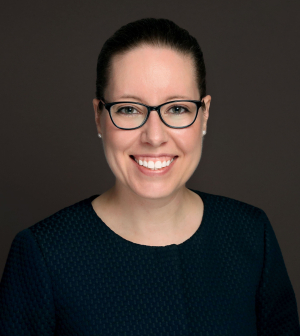
Brianne Todd
Brianne Todd serves as a professor of practice at the Near East South Asia Center for Strategic Studies at the National Defense University, where she leads security cooperation initiatives and strategic engagement with military officers and government officials from Central Asia, South Asia, the Middle East, and North Africa. Additionally, she serves as an Adjunct Assistant Professor with the Center for Security Studies in the Edmund A. Walsh School of Foreign Service at Georgetown University. She is also a nonresident senior fellow at the Atlantic Council’s Eurasia Center, specializing in U.S. foreign policy and regional security issues in Central Asia. Todd previously served as Director for Central Asian Affairs at the National Security Council from 2023-2025. She also held key roles at the U.S. Department of State and the Office of the Under Secretary of Defense for Policy, earning commendations for her contributions to U.S. policy on Central Asia and Afghanistan.
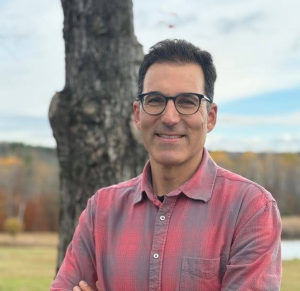
Matthew Rojansky
Matthew Rojansky serves as President and Chief Executive Officer of The U.S. Russia Foundation. He is a widely recognized expert on the history and practice of U.S.-Russia relations, and developments in the region.
Prior to USRF, Rojansky served from 2013 as Director of the Kennan Institute within the Congressionally chartered Woodrow Wilson International Center for Scholars. Since the Wilson Center’s closure in early 2025, he has served as Board Chair of the independent Kennan Institute, which continues its mission of advancing U.S. knowledge and expertise on Russia, Ukraine and the surrounding region.
Rojansky also served as the U.S. Executive Secretary for the Dartmouth Conference, a track-two U.S.-Russian conflict resolution initiative begun in 1960, and has lectured at colleges and universities throughout the United States, Russia and Europe, including Dartmouth College, where he is a visiting scholar. He is also a counselor to the Aspen Institute Congressional Program, and the Euro-Atlantic Security Leaders Group.
Previously, Rojansky was Deputy Director of the Russia and Eurasia Program at the Carnegie Endowment for International Peace, and Executive Director of the Partnership for a Secure America. He has served as an Embassy Policy Specialist at the U.S. Embassy in Kyiv, Ukraine, a Visiting Scholar in the Research Division at the NATO Defense College, and a Clerk to Judge Charles E. Erdmann on the U.S. Court of Appeals for the Armed Forces. He received his B.A. in history from Harvard College, and his J.D. from Stanford Law School.
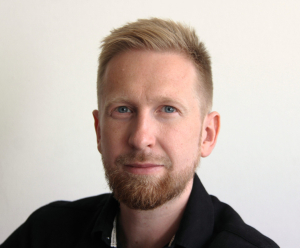
David Leupold
Dr. David Leupold is a historical sociologist, a scholar of the former Soviet South (Central Asia and the Caucasus) and Türkiye, and winner of the CESS Book Award based at the Leibniz-Zentrum Moderner Orient, Berlin.
He was a postdoctoral fellow in the Department of Sociology at the University of Michigan, the principal investigator of his own third-party funded research project, and the author of the books Embattled Dreamlands: The Politics of Contesting Armenian and Kurdish Homelands (2020, with a foreword by Ronald G. Suny) and The Death and Life of Southern Soviet Cities: Urban Futures and Their Afterlives (2026).
Currently, he is pursuing his qualification for a full professorship (habilitation) at Humboldt-Universität zu Berlin. He is fluent in Armenian, Persian (Farsi), Russian and Turkish, among others.