
Fellows
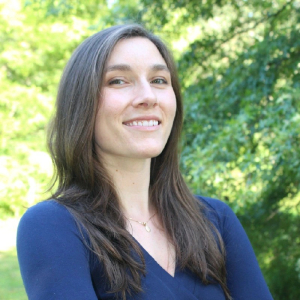
Rowan Baker
Rowan Baker is a doctoral student in Anthropology and Environment at Yale University. Drawing on ethnographic and archival research, her dissertation examines how environmental transformation, imperial intervention, and forced displacement reshape place-based identities and multispecies relationships over time in the Middle Caucasus. Before her doctoral studies, Rowan served as a Fulbright Research Grantee to Georgia, a Policy Fellow with the U.S. Commission on Security and Cooperation in Europe, Research Director of the Stanford U.S.-Russia Forum, and an International Fellow with CRRC Georgia. She has spent over three years in Moldova, Kazakhstan, and Georgia as a NSLI-Y, Boren, CLS, Fulbright, and FLAS scholar. Rowan holds a B.A. in International Development Studies and Russian Studies from UCLA and a Master of Environmental Science from Yale.
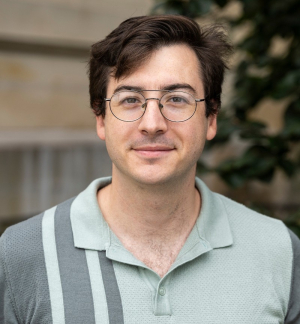
Albert Cavallaro
Albert Cavallaro is a PhD Candidate in history at the University of Michigan, Ann Arbor, where his research focuses on the history of museums, Central Asia, the Russian empire, and the Soviet Union across the 19th, 20th, and 21st centuries. Albert’s dissertation, “Things Disappear: The Russian Empire, Central Asian Museums, and Imperial Love, 1876-1925” examines the growth and changing roles of museums in a developing and then crumbling colonial society. Drawing on sources he gathered from over two years of fieldwork inside of Uzbekistan and research in over 21 archives, museums, and libraries, he argues that this period—divided by war, imperial collapse, and regime change—was united by a widespread belief in the efficacy of museums to meet the changing demands of the age. Thus, his work sheds new light on the final years of the Russian empire and the first years of the Soviet Union. Utilizing Central Asian Turki and Russian language periodicals, court records, petitions, teachers’ reports on field trips, and police investigations into illegal archaeological digs, he shows how among Muslim Turki-speaking communities and Russian colonists museums became sites of not only cultural and political significance but also places of deep emotional resonances.
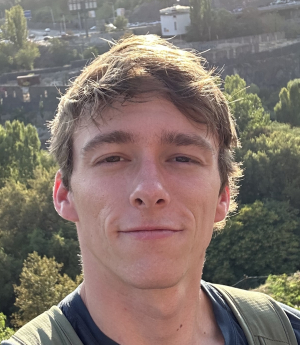
Cameron Cronwall
Cameron Cronwall is an MA candidate in the Middlebury Institute of International Studies Nonproliferation and Terrorism Studies program, specializing in the Russian language and counterterrorism. He earned his BA in Russian, Eastern European, and Eurasian Studies from Emory University in 2024, and continued on to complete three semesters in the Middlebury College MA in Russian program. His current research surrounds the institutionalization of historical memory of the Great Patriotic War in modern Russia and the politicization of history. He is particularly interested in the performance of collective memory as a pseudo-religious activity, and the maintenance of historical memory through film and media.

Leora Eisenberg
Leora Eisenberg is a fifth-year PhD student in History at Harvard University, where she studies the development of national music in Soviet Central Asia. She graduated summa cum laude from Princeton University with a B. A. in Slavic Languages and Literatures in 2020 and received her M. A. in History from Harvard University in 2023. Leora is the recipient of awards such as the Critical Language Scholarship, Blavatnik Archive Fellowship, Title VIII Research Scholarship, and others, and her work has most recently been published in Central Asian Survey, Qalam, and Bosma. She enjoys learning foreign languages, with proficiency in Russian, Farsi, Uzbek, Hebrew, and others.
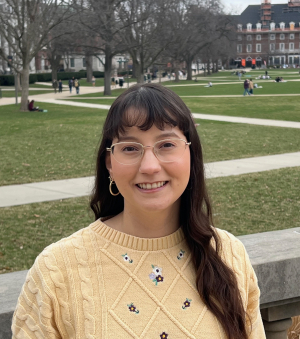
Mariana Kellis
Mariana Kellis is a History PhD student at the University of Illinois at Urbana-Champaign. Her dissertation focuses on imperial governance in borderland regions, employing a comparative approach between the Russian and Spanish Empires. She is particularly interested in questions of legal culture, privilege, and obligation in the nineteenth-century era of reforms. Mariana had the opportunity to serve as a Graduate Affiliate of the REEES Think Tank and as an Editorial Assistant for Slavic Review. She has previously studied Russian in Daugavpils, Latvia through the Learn Russian in the EU program. She has also conducted archival research in Latvia, Puerto Rico, and Spain. Mariana is excited to explore the legacies of the Russian Empire and Soviet Union in Central Asia and the South Caucasus region from different perspectives through the Monterey Summer Symposium.
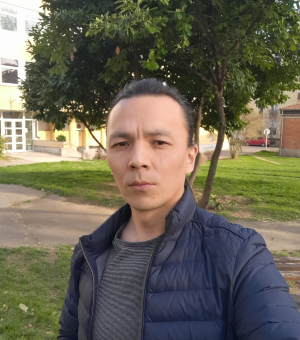
Samat Kozhobaev
Samat Kozhobaev is a PhD student in international politics at the University of Pécs, Hungary, whose work focuses on Central Asia and the broader Eurasian region. His research examines how state identity, geopolitical structures, geography, and historical experience shape the evolution of state behavior dynamics. He takes an interdisciplinary approach, combining perspectives from political science and philosophy, economics, anthropology, and history. His recent published works include applying Walt Rostow’s development model to China’s economic growth at the intersection of economics and geopolitics; and analyzing state narratives surrounding war through the philosophical thoughts of Antonio Gramsci. Currently, he is conducting a literature-based anthropological and historical study of the Pamir Kyrgyz of Afghanistan to explore life outside the institutional framework of the modern state described by Thomas Hobbes as the “state of nature” in his fundamental work “Leviathan”; and developing a study on post-Soviet Kyrgyzstan that examines the role and necessity of democracy in the political and economic development of small states by conceptually contrasting Amartya Sen’s notion of development as freedom with the governance model associated with Lee Kuan Yew.
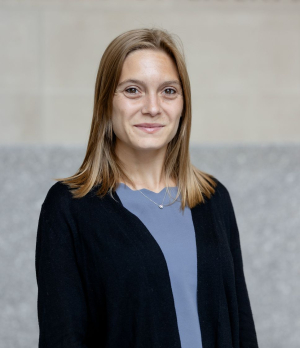
Emma Larson
Emma Larson is a first-year graduate student in the Department of History at Princeton University. Her research explores the political, cultural, and economic tools of Russian colonization in Central Asia, with a particular focus on nomadic communities in contemporary Kazakhstan. She is especially interested in how Central Asia’s Islamic traditions, indigenous reform movements’ ideas about gender roles, and Kazakhstan’s long experience under Russian imperial rule shaped early Soviet efforts to remake gender relations in the Kazakh Republic. Prior to coming to Princeton, Emma completed a master’s degree in Russian, Eurasian, and Eastern European Studies at Columbia University’s Harriman Institute. In 2021, she received her bachelor’s degree from Williams College, graduating with honors in History and Russian. Outside of her research, Emma is a passionate teacher who enjoys working with students to think through the most pressing historical and contemporary issues of our time. She has taught fifth-grade social studies in New Jersey, media literacy in Kazakhstan, and currently serves as a Teaching Fellow with the Princeton University Preparatory Program.
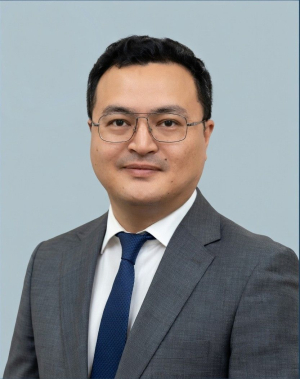
Ilkhomjon Muminov
Ilkhomjon Muminov teaches International Political Economy at the University of World Economy and Diplomacy in Tashkent, Uzbekistan. He obtained his Bachelor’s degree in World Politics and his Master’s degree in International Relations and Foreign Policy from the same institution prior to undertaking doctoral studies overseas. He subsequently obtained his PhD in National Development from Peking University. His dissertation thesis investigated the impact of World Trade Organization admission on trade performance in transition economies, used structural gravity models and difference-in-differences estimates to assess how institutional reforms influence the advantages of economic integration.
Ilkhomjon’s research interest lies in international political economy, Eurasian geopolitics, and development policy. His prior research investigated geopolitical dynamics and the interests of external powers in Central Asia, encompassing analyses of U.S. strategic involvement in the region and the significance of energy and connectivity in India–Central Asia relations. He has published studies on regional integration processes and the developing political economy of Central Asian collaboration.
Recently, his study has focused on the political economy of essential minerals and supply chain security in Eurasia. He is especially focused on the intersection of rare earth elements and other critical resources with infrastructural corridors, industrial strategy, and the great power rivalry among China, Russia, the European Union, and the United States. His current research examines how Central Asian nations might convert resource endowments and connectivity initiatives into economic advancement while managing geopolitical rivalry and adapting to changing regional institutions.

Aleksandr Orlov
Aleksandr Orlov is a PhD student in History at Columbia University specializing in Russian and Central European history. His interests lie in political, intellectual, and religious history. Prior to Columbia, Aleksandr completed a MA program in Russian History at the European University at St Petersburg and a one-year MA program in Comparative History at the Central European University. His current research investigates religion, nationalism, and trans-imperial connections between Russia and the Habsburg Monarchy in the mid-nineteenth century. He is particularly interested in the history of the Old Believers, a branch of Eastern Orthodoxy that emerged in seventeenth-century Russia following a dispute over ritual practices. In his dissertation, he focuses on the establishment of the Old Believer Church in Austrian Bukovina and its consequences for the nineteenth-century imperial order.

Bella Phillips
Bella Phillips is a Master’s candidate in the Center for Eurasian, Russian and East European Studies at Georgetown University’s Walsh School of Foreign Service. Her research examines geopolitical transformation and regional connectivity across Eurasia, with a focus on the South Caucasus and emerging energy markets in Central Asia. She has conducted research in Georgia and Armenia and is currently pursuing research with Georgetown’s Institute for the Study of Diplomacy. Bella received her BA in Philosophy and Russian and Eastern European Studies from Pomona College. She speaks Russian and is currently studying Persian.

Aleksandra Riabichenko
Aleksandra Riabichenko is a PhD Candidate and Teaching Fellow at the University of Melbourne, Australia. Her research interests include the Second World War and its aftermath, wartime collaboration, displacement, and post-war justice. Her dissertation offers an innovative and transnational perspective on post-1945 reckoning by examining how Holocaust perpetrators’ agencies and survival strategies interacted with Soviet, European, and Australian institutional decisions, and shaped the dynamics of retribution and compromise across the Iron Curtain. Before her PhD, Aleksandra received her master’s degree from the Central European University in Vienna and a bachelor’s degree from the Higher School of Economics in Moscow. Outside academia, Aleksandra can often be found at the cinema or taking long walks across the city.
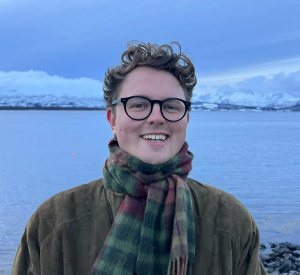
Lukas Wahden
Lukas Wahden is a Ph.D. candidate in International Relations at Sciences Po Paris (CERI) and an Associate Fellow with the Russia Program at George Washington University. His research examines how status-seeking, military strategy, and resource appropriation (osvoenie) have shaped Soviet and Russian policies towards areas beyond traditional territorial sovereignty, including the maritime Arctic, Antarctica, and outer space.
He holds a BA from University College London, a dual MSc in International Relations from the London School of Economics and Sciences Po, and a Master’s degree in China Studies from the Yenching Academy at Peking University. He has lived and studied in Russia and China and writes the monthly newsletter 66° North, which analyses developments in Arctic security.