
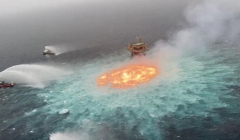
From Negligence to Malevolence: How the Climate Crisis has Gone Critical
Human-induced climate change has gotten so bad that our only hope isn’t to reverse it, but to simply save what we can.
Human-induced climate change has gotten so bad that our only hope isn’t to reverse it, but to simply save what we can.
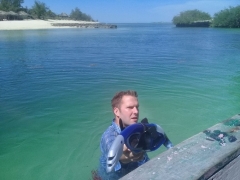
Bryce Bray MAIEP ’18 has been awarded a Boren, a Fulbright, and most recently an Institute of Current World Affairs fellowship, all of which are helping him continue to develop expertise and expand his professional network in his chosen field of climate policy.

Researchers in Southern California are using lidar to improve scientists’ understanding of the erosional forces that cause bluffs to collapse. Dr. Charles Colgan, Director of Research at the Center for the Blue Economy, weighs in with research findings from a 2018 CBE study.
In 2008 the United Nations designated June 8 as World Oceans Day, “a day for humanity to celebrate the ocean.” Since then, it’s had about as much to do with the ecological economic and human rights disasters affecting our seas as Arbor Day has to do with global deforestation. Because it’s so vast and poorly regulated, the ocean sector of the global economy has been largely out of sight and out of mind.
The 5th International Symposium was hosted by National University of Ireland, Galway, and Dr. Charles Colgan, the Director of Research at the Center for the Blue Economy (and the individual who instituted the methodology to measure the blue economy now used worldwide) gave a notable presentation.

While not having an official ocean policy within its first 100 days, the Biden administration’s approach to managing our public seas looks destined to be of historical significance.
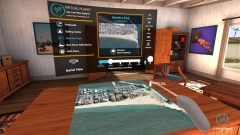
| by City of Santa Cruz and and Virtual Reality Study Authors
As coastal communities around the globe contend with the impacts of climate change including coastal hazards such as sea level rise and more frequent coastal storms, educating stakeholders and the general public has become essential in order to adapt to and mitigate these risks.